

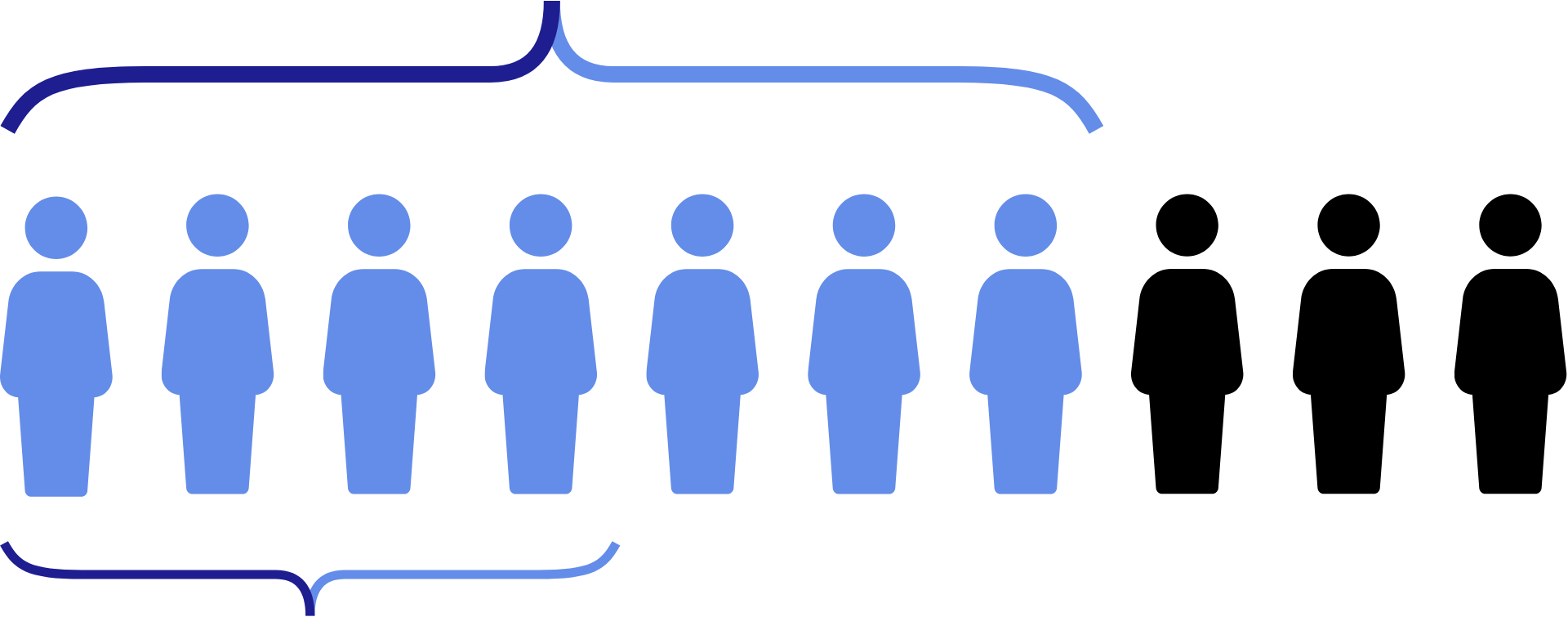
An estimated 1.36 million Medicaid Enrollees with CHD living in the U.S.; ~70% are children.
CHD is the most common birth defect in the United States, affecting approximately one in every 100 births. Advances in diagnostics, surgery, and medical management have transformed outcomes over the past several decades, allowing many individuals born with CHD to survive into adulthood. As a result, CHD is increasingly recognized not just as a pediatric condition but as a lifelong health condition requiring ongoing access to specialized care, care coordination, and support services over a full lifespan.
Individuals with CHD and their families navigate complex and highly individualized healthcare journeys. Challenges may begin before birth, when CHD may go undetected during prenatal screening; after birth, some forms of CHD may not be detected through routine pulse oximetry screening. Throughout childhood and adulthood, individuals with CHD must navigate a complex insurance system that may not adequately accommodate their lifelong care needs. From care transitions between pediatric and adult care settings to coverage changes as one changes jobs, ages off a parent’s plan, moves states, or leaves for college, parents frequently serve as de facto care coordinators.
As we developed our Public Affairs strategy, we commissioned a comprehensive assessment of the CHD Medicaid landscape, conducted by Health Management Associates, including a review of published research focused on CHD and Medicaid populations; quantitative analysis of Medicaid and commercial claims data; a scan of federal and state policies relevant to CHD; and structured discussions with experts.
So, what did we find?
DEFINING THE LANDSCAPE
There are 1.36 million Medicaid enrollees with CHD living in the U.S. and most of them are children.
~70% of identified Medicaid enrollees with CHD were children.
More than half of those children were younger than four.
For CHD kids, the early years matter.
For children with a severe CHD, nearly 80% had a surgery in the first year of life. Nearly 40% had a surgery between ages 1 and 4 years (Journal of the American Heart Association).

1 in 5
Medicaid enrollees with CHD live in rural communities.
Rural access matters.
Provider availability and distance from specialty centers can create additional barriers.
THE CHD MEDICAID POPULATION HAS GROWN…
…AND IT’S OLDER THAN YOU MIGHT THINK
Growing lifelong care needs
Advances in treatment mean more people with CHD are living into adulthood and need ongoing specialty care and long-term support. CHD is not only a pediatric issue. Medicaid increasingly serves this population across every stage of life.
CHD is not only a pediatric issue. Medicaid increasingly serves this population across stages of life.
THE CHD POPULATION IS COSTLY FOR MEDICAID
5x
higher for Medicaid compared to people without CHD
How Medicaid pays for care
Medicaid pays for provider services either through fee-for-service (FFS), or Medicaid managed care arrangements. This data represents only FFS.
OPPORTUNITIES TO STRENGTHEN CHD CARE IN MEDICAID
Medicaid is a critical lifeline for more than one million Americans living with congenital heart disease (CHD). As advances in care help people with CHD live longer, their health care needs are changing. This presents an important opportunity for the Centers for Medicare & Medicaid Services (CMS) and state Medicaid programs to strengthen access to care and better support individuals with CHD at every stage of life.
The findings highlight opportunities to build on Medicaid’s essential role by improving access to specialized care, addressing gaps in services, and supporting the growing needs of the CHD community. The following recommendations outline practical steps federal and state policymakers can take to improve care and health outcomes for people living with CHD.
Opportunities to strengthen CHD care in Medicaid include:
- Strengthening access to specialized CHD care. Too many patients, particularly those in rural and underserved communities, live far from the Centers of Excellence and specialists they need. Telemedicine and other technology-enabled hub-and-spoke models can close that distance and bring specialized expertise closer to home.
- Improving care coordination. People with CHD often see many providers in many settings, and care can become fragmented along the way. When those providers work together in an integrated way, patients benefit from more consistent care and better outcomes.
- Navigating insurance transitions across each patient’s lifespan. The move from pediatric to adult care is a critical and often difficult point for patients. As more people with CHD live well into adulthood, a stronger insurance transition process and a health system prepared to serve this growing population are essential.
- Advancing innovative care models and technologies. Emerging medical technologies, digital tools, and new approaches to care delivery hold real promise for the CHD community. Appropriate access to these advances can help ensure that patients benefit from progress as it happens.
LOOKING AHEAD
The Mussallem CHD Alliance is committed to working alongside state Medicaid leaders, healthcare providers, patients, families, and other stakeholders to better understand the challenges facing the CHD community. By bringing together data, patient and family perspectives, and policy expertise, we hope to serve as a resource to states as they explore innovative approaches to meeting the needs of this growing population.